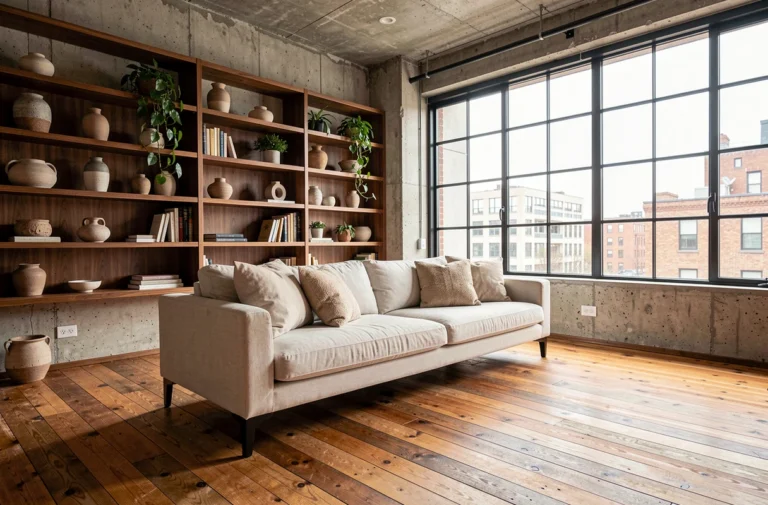
Setting an amount before choosing the slightest shade of paint or the first piece of upholstery fabric remains the main point of friction in a customized interior decoration project. The budget depends less on a universal rule than on a trade-off between three variables: the area concerned, the level of service aimed for, and the degree of professional intervention.
Understanding how these variables interact helps avoid two symmetrical pitfalls: under-investment, which generates frustrating compromises, and silent overruns, item by item.
Insurance and professional status: the budget item that no one quantifies
Even before discussing furniture or colors, the legal nature of the mission influences the overall cost. In France, an interior decorator who limits themselves to aesthetic advice (material choices, furniture arrangement, color palette) generally operates under a professional liability insurance. The cost of this coverage remains moderate and has little impact on the final quote.
The situation changes as soon as the mission shifts towards project management or touches on elements related to the work. In this case, ten-year insurance may become mandatory, which significantly increases the professional’s fees. For the client, the difference between these two levels of intervention can represent a significant gap in the overall bill, even though the visible decorative service may not be fundamentally different.
Checking the exact status of the professional and the type of insurance they hold is not a mere administrative formality. It is a budget item in its own right that conditions both the price and the level of protection in case of defects.

Budget allocation for decoration: balancing fixed and flexible items
There is a strong temptation to divide the budget equally among the rooms. This approach ignores a simple fact: not all rooms generate the same cost per square meter. A kitchen or bathroom involves technical materials and sometimes plumbing, while a living room relies more on furniture and textiles. It is better to distinguish between two categories of expenses.
Fixed items include everything related to the visible structure: flooring, wall paint, built-in lighting. These elements are difficult to replace once installed and deserve the most substantial part of the budget. Estimating that they can be changed in a few years by reducing quality is rarely financially viable.
Flexible items concern furniture, textiles, and decorative accessories. Their replacement remains possible without heavy work. This is where personalization is most expressed, and it is also where professional support helps to streamline the color budget with decoserotonine.fr by avoiding impulsive purchases that end up costing more than initial advice.
- Flooring and paint: a priority item to secure, as a later change involves work and a notable additional cost.
- Structuring furniture (sofa, table, storage): invest in durability rather than current trends.
- Accessories and textiles: the most accessible lever for personalization, to be adjusted according to the remaining budget after fixed items.
Work quotes and documentary compliance: what the budget must cover
A customized decoration project that includes work, even light work, generates quotes. These documents are not mere numerical estimates. A building quote must mention specific elements, including the ten-year insurance with the insurer’s name and contract number. The absence of these mentions exposes the client to a real legal risk in case of a dispute.
Allowing time for documentary verification before signing is part of the budget in the broad sense. Comparing three quotes is not enough if none of them contain the mandatory mentions. The cost of a check by a legal professional or an insurance broker is marginal compared to the risk of an uncovered loss.
Field feedback varies on the rigor of artisans in this regard. Some spontaneously provide all the documents, while others wait for requests. Integrating this verification into the project schedule avoids unpleasant surprises once the work begins.

Cost of interior decoration advice: understanding billing methods
The cost of a decorator varies according to the format of the service. A one-time consultation (sometimes called decor coaching) is generally billed by the hour or at a flat rate for a visit. A complete project with mood boards, furniture selection, and implementation follow-up represents a more significant financial commitment.
Three billing methods coexist in the market:
- Flat rate per room or project: the client knows the total amount from the start, which facilitates budget arbitration.
- Hourly rate: suitable for short missions or one-off adjustments, but harder to cap without prior framing.
- Percentage on the amount of purchases: the decorator receives a commission on the furniture and materials they prescribe, which can create a bias towards more expensive products.
Asking about the payment method before any commitment allows for comparing offers on a uniform basis. A flat rate that seems high may turn out to be more economical than an hourly rate on a project that drags on.
Margin for unforeseen events: the item that everyone underestimates
A decoration budget without a safety margin is an incomplete budget. Unforeseen events are not exceptions; they are part of the normal course of a project. A flooring material that is out of stock requiring an upgrade, a partition whose condition necessitates additional treatment, a delivery delay that postpones a craftsman’s intervention: each eventuality has a cost.
Planning a safety margin from the initial estimate transforms these eventualities into manageable adjustments rather than incurred overruns. However, this margin should not serve as an adjustment variable to compensate for an initially underestimated budget. It protects against the unforeseen, not against imprecision.
The exact amount of this reserve depends on the complexity of the project and the age of the property. A recent apartment in a building up to current standards holds fewer surprises than an old house where each wall opening may reveal a technical unforeseen.
Defining a customized interior decoration budget means mapping out these different items before making any aesthetic choices. The most reliable budget is the one that clearly distinguishes between fixed items, flexible items, and a margin for unforeseen events, incorporating the actual cost of professional support and documentary compliance. Any amount invested in this preparation will be saved during execution.