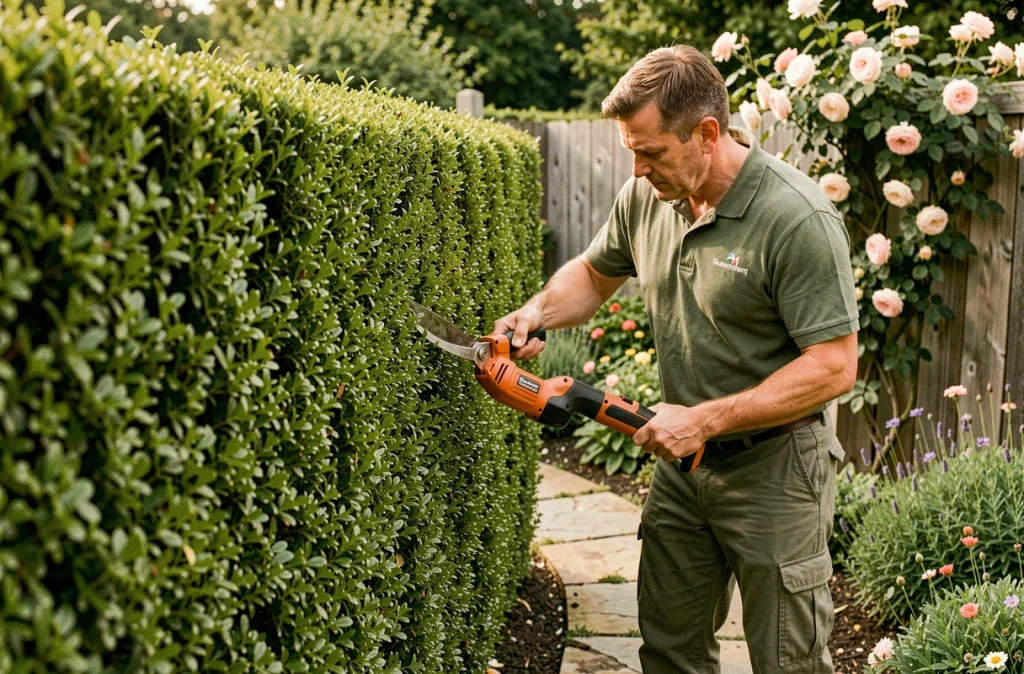
A perennial bed that wilts in the middle of summer, a hedge of laurels encroaching on the neighbor’s fence, an automatic watering system that has been running empty for three weeks: we all know these situations where the garden slips out of control due to a lack of time or method. Entrusting the maintenance of your green spaces to a professional is not a luxury; it is often the most straightforward solution to a problem of consistency.
Soil and plant diagnosis: the often-overlooked starting point
Before pruning or mowing, a landscaper begins by observing. This involves a true on-site diagnosis: soil type (clay, sandy, limestone), exposure, health status of trees and shrubs, presence of fungal diseases or pests. This work determines all subsequent interventions.
A sparse lawn, for example, does not always need reseeding. The problem sometimes stems from compacted soil that prevents water from penetrating. A professional identifies the cause before proposing an action, whereas one might tend to buy a bag of seeds at random.
The diagnosis prevents treating symptoms without correcting the root cause of the problem. For medium-sized gardens, this step rarely takes more than half a day, but it guides the maintenance plan for the entire season. Providers like Jamet Espaces Verts incorporate this analysis phase into their recurring maintenance contracts, allowing for adjustments to be made over the months rather than applying a standard program.

Annual maintenance contract: scheduled mowing, pruning, and watering
The difference between a garden that ages well and one that deteriorates lies in consistency. You can mow once in March and forget about it for six weeks: the result will be a stressed lawn, yellowed in places, overrun with weeds.
What a typical landscaper contract covers
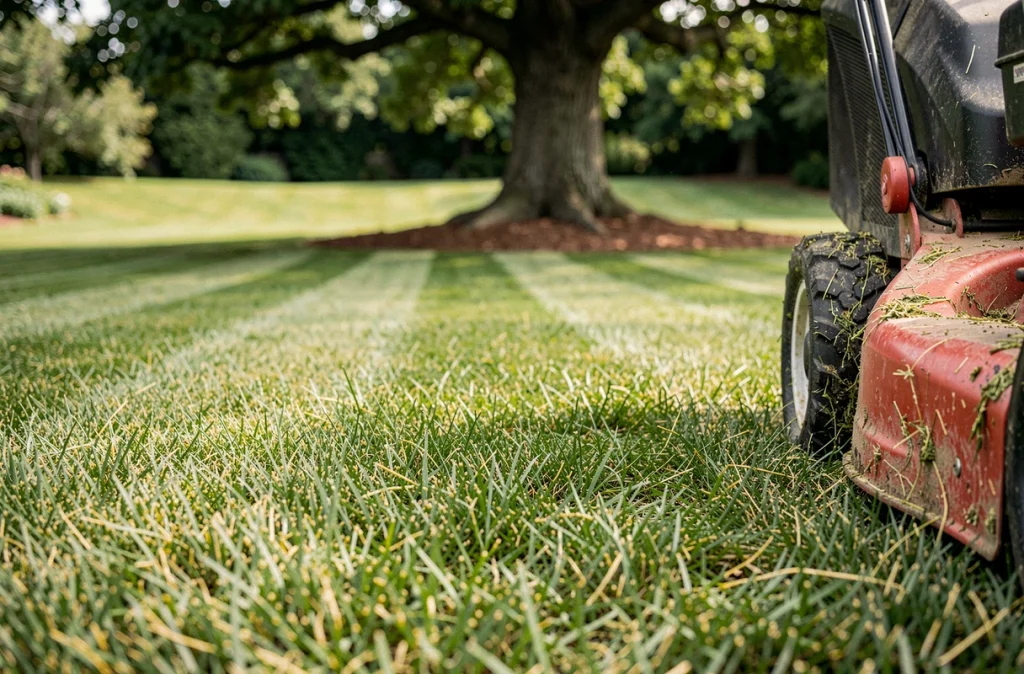
- Regular mowing with collection of green waste, adjusted to the cutting height according to the season (higher in summer to limit evaporation)
- Pruning of hedges, shrubs, and fruit trees at the right times, respecting the vegetative cycle of each species
- Monitoring and adjusting the irrigation system, including checking drippers, nozzles, and timers
- Manual or mechanical weeding of beds, with the addition of mulch to reduce regrowth
On the ground, feedback varies by providers and regions, but a visit every two to three weeks covers most needs for a residential garden. The landscaper adjusts the frequency based on the weather and the actual growth of the plants, not a fixed schedule.
Controlled watering and water savings
Poorly adjusted watering wastes water and encourages root diseases. Professionals increasingly work with connected timers that take rainfall into account. We water less, but better, targeting the areas that truly need it.
Plants established for several seasons often require much less water than one might think, provided that the mulch is maintained and the soil is not bare. This is a point that the landscaper monitors at each visit.
Tax credit and personal services: the overlooked financial lever
Routine garden maintenance services (mowing, weeding, pruning hedges at a reachable height, brush clearing) can fall under the Personal Services scheme. Specifically, this entitles you to a tax credit of 50% on the amounts paid, within the regulatory ceiling.
To benefit from this, the provider must be registered as a personal services organization. Landscaping creation work (earthworks, planting large specimens, masonry) does not fall under this framework. We are only talking about recurring maintenance.
This scheme changes the economic calculation. An annual maintenance bill can amount to half its value after tax deduction, making the use of a professional more accessible than one might imagine. Before signing, it is sufficient to check that the company has the appropriate approval or declaration.
Mulching, suitable plants, and differentiated mowing: actions that transform a garden
Professional maintenance is often associated with mowing and pruning. Practices are evolving towards more economical and resilient actions that sustainably transform the appearance of the garden.
Mulching beds limits weeding, retains soil moisture, and nourishes the earth as it decomposes. A landscaper chooses the type of mulch (pine bark, wood chips, flax flakes) based on the soil pH and the plants in place. An acidic mulch on a lavender bed, for example, would be counterproductive.
Selecting plants suited to the local climate significantly reduces watering and treatment needs. A professional recommends species that tolerate summer drought rather than water-hungry plants, even if they are trendy.
Differentiated mowing involves leaving certain areas of the garden with tall grass, mowed only two or three times a year. This promotes biodiversity (pollinating insects, small wildlife) while reducing overall mowing time. A well-maintained garden is not necessarily a garden mowed short everywhere.
Property value enhancement: a well-kept exterior is noticeable at resale
A garden left to neglect degrades the first impression of a property. Conversely, well-maintained green spaces, with neat hedges, clean lawns, and structured beds, directly contribute to enhancing property value.
Real estate agents confirm: the exterior constitutes the first visual contact with a property. Regular maintenance by a landscaping gardener is not a wasted expense; it is an investment that reflects in the property’s valuation. Healthy trees and shrubs, properly pruned, demonstrate serious upkeep that buyers immediately perceive.
Hiring a green space maintenance company also ensures that interventions respect good horticultural practices. A poorly pruned tree can take years to recover, or even die. The cost of correction then far exceeds that of well-conducted preventive maintenance from the start.