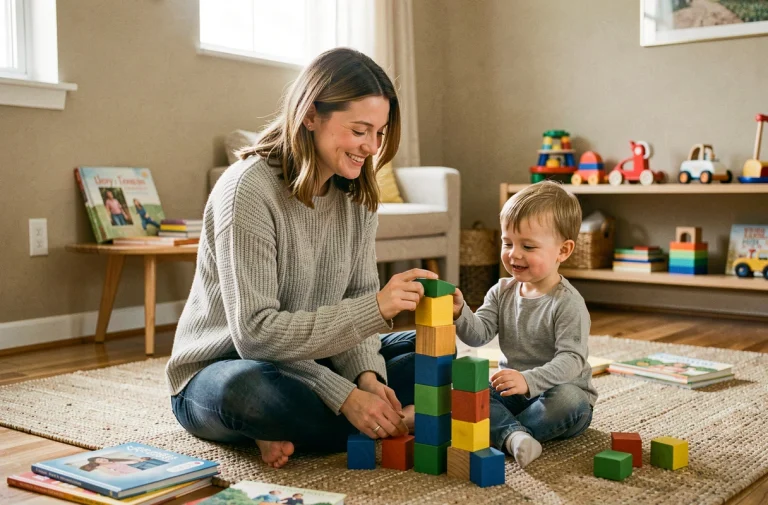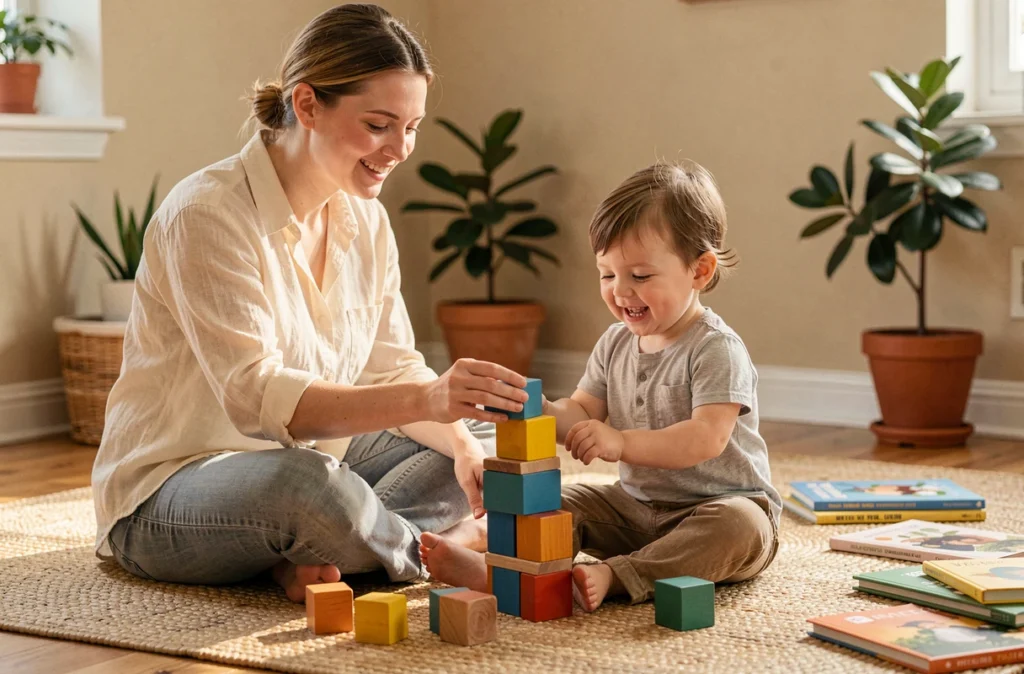
The French recommendations on children’s awakening and well-being have significantly evolved in recent years. Health authorities now emphasize a specific point: it is not the sophisticated activities or high-tech toys that support development, but the quality of daily interactions, free play, and movement. This shift changes how parents can support their child on a day-to-day basis.
Screens and Child Development: What French Recommendations Have Changed
Since 2024-2025, French authorities no longer just advise to “limit screen time.” The official position recommends a total absence of screens before 2-3 years, followed by discouraged and exceptional use between 3 and 6 years. The rules have become very concrete: no screens in the morning before school, during meals, in the bedroom, or before bedtime.
This tightening is based on findings documented by several research summaries published in 2025-2026. The effects of screens on children’s anxiety or well-being are often weak if one only looks at the number of hours. In contrast, the effects become significant when screens replace sleep, free play, or family interactions. The issue is not so much the duration but what digital devices take up in the day.
For parents, this means that turning off the tablet is not enough. They must also consider what the child is doing instead, and whether these replacement activities truly nurture their development. Resources like the mamanserepose.fr website dedicated to children help identify suitable alternatives for each age group.

Free Play and Development: Why Structure Activities Less
The temptation is strong to plan a child’s day like a school schedule: painting workshop at 10 AM, construction play at 11 AM, guided reading after nap time. Available data on cognitive and motor development point in another direction.
Free play, meaning play not directed by an adult, simultaneously stimulates coordination, language, and emotional regulation. A child stacking stones in the garden works on fine motor skills, tests gravity, and learns about frustration when the stack collapses. No structured workshop replicates this combination.
This does not mean abandoning all activity proposals. The challenge is rather to create spaces where the child decides for themselves what to do, with simple materials available:
- Everyday objects repurposed (wooden spoons, boxes, fabrics of different textures) that encourage sensory exploration without instructions
- A small outdoor space (balcony, courtyard, park) where movement is not constrained by indoor furniture
- Assumed “nothing” times, without proposed activities, to let boredom trigger creativity
Field feedback varies on the ideal duration of these free periods. Some early childhood professionals speak of short sequences, while others recommend entire half-days without a program. The child’s age and temperament play a determining role.
Parent-Child Interaction: The Factor That Toys Cannot Replace
A synthesis of longitudinal research reported in 2026 followed children for a decade to measure the impact of various factors on their development. The main finding: the active engagement of the father in daily play is correlated with better cognitive and emotional development. This result does not minimize the maternal role; it highlights that the diversity of interactions matters.
In practical terms, “quality interaction” does not mean playing for hours. A few minutes of full attention, where the adult gets down to the child’s level and follows their initiative rather than directing the play, produce measurable effects. The child learns language in context, develops confidence, and adjusts their social behaviors.
What Characterizes a Useful Interaction for Development
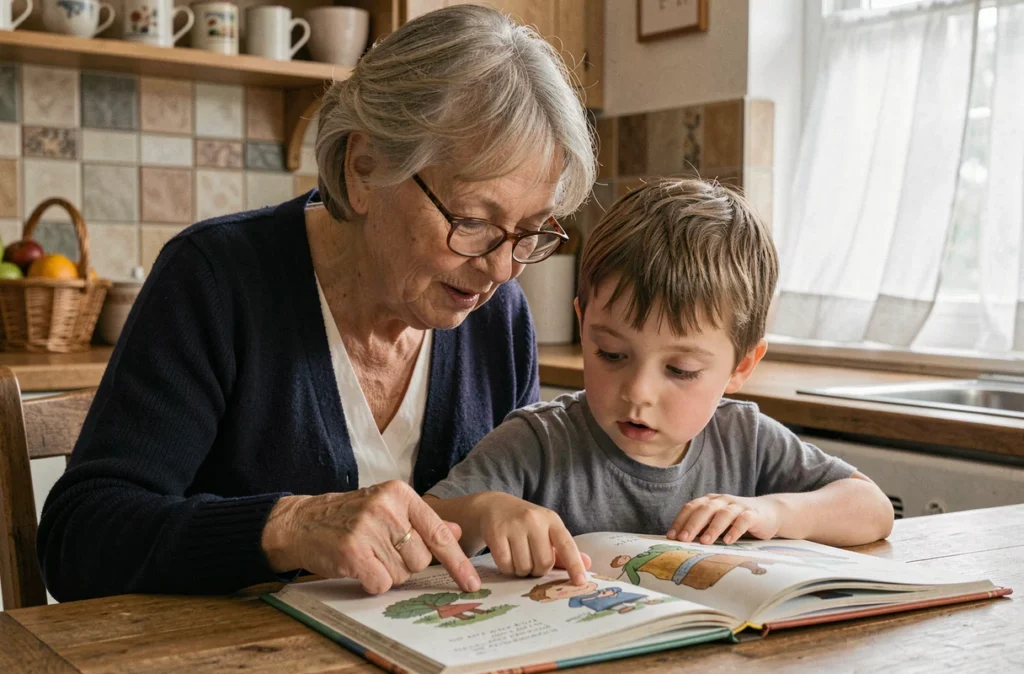
A common pitfall is to confuse presence with interaction. A parent in the same room but absorbed in their phone does not provide the same support as a parent who comments on what the child is doing, who responds to their attempts at communication, even pre-verbal ones.
Recent research emphasizes a specific mechanism: “serve and return,” where the adult responds to the child’s signals like in a game of catch. The child points, the parent names the object. The child babbles, the parent echoes the sound while adding a word. These micro-exchanges build the neural architecture much more effectively than any educational toy.
Sleep and Daily Rhythm: The Often Overlooked Foundation of Well-Being
Sleep is the blind spot in many discussions about children’s awakening. We talk about activities, pedagogy, toys, but a child who sleeps poorly does not have the resources to explore or learn. Current recommendations place sleep as a prerequisite for everything else.
Protecting sleep involves choices that sometimes go against the grain. Refusing screens in the evening, even when the child asks, maintaining regular bedtimes including on weekends, accepting that napping remains necessary well beyond what some parents imagine. These daily trade-offs are not spectacular, but they condition the learning capacity for the next day.
One point deserves attention: recent research shows that exposure to screens before bedtime affects sleep quality more significantly in young children than in adults. Blue light is only part of the problem. It is mainly the late cognitive stimulation that delays falling asleep and fragments sleep cycles.
Supporting a child’s awakening daily relies less on choosing the right toys or the right teaching method than on three interdependent pillars: free play without instructions, reciprocal interactions with close adults, and protected sleep. These three levers cost nothing and require no special equipment, making them both accessible and easy to underestimate.