A newborn does not require a meticulously planned activity program. What it needs during its first months is a stable environment, regular physical contact, and attentive adults who respond to its signals. Supporting the baby during this period mainly involves adjusting a few daily gestures, sometimes counterintuitive, that make a real difference in its development and well-being.
Infant Sleep: Shared Room, Separate Bed
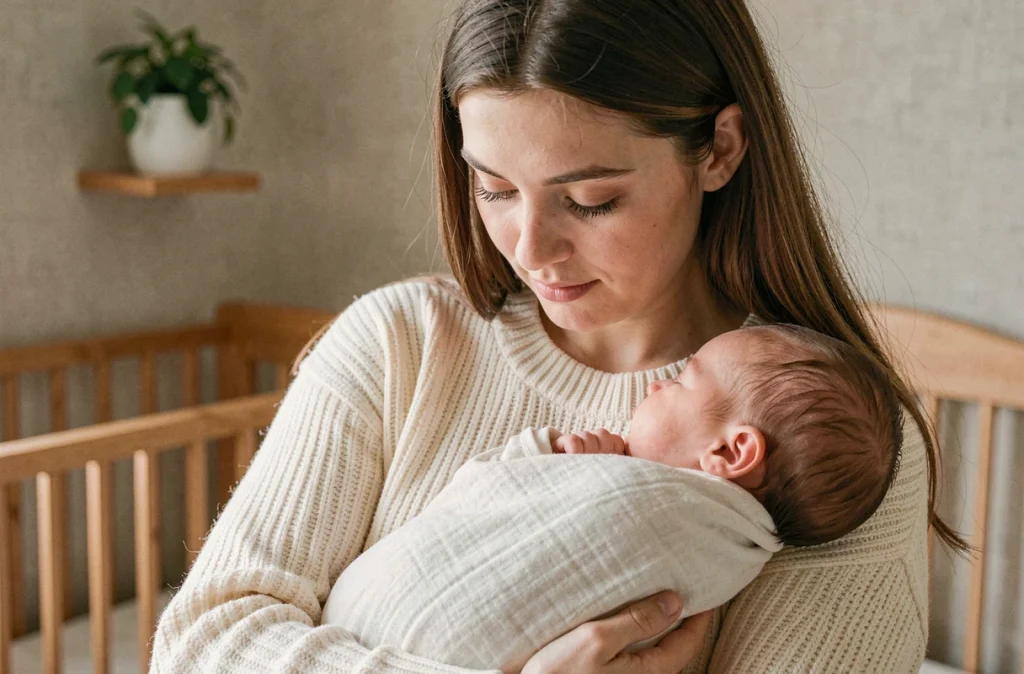
Have you noticed that your baby falls asleep more easily when it feels you nearby? This reflex is normal and even protective. The High Authority of Health recommends sharing a room with the baby for at least six months, without sharing the bed. This arrangement significantly reduces the risk of sudden infant death syndrome.
The trap is to confuse proximity with co-sleeping in the parental bed. Thick duvets, pillows, and overly soft mattresses are all risk factors. The baby sleeps in its own space (crib, cot), placed on its back, in a sleep sack appropriate for the room temperature.
When it comes to rituals, consistency matters more than duration. Dimming the lights, speaking softly, offering skin-to-skin contact for a few minutes before laying the baby down: these cues help it gradually distinguish day from night. It’s not magic, and the first weeks often remain chaotic, but a short and repeated ritual structures sleep faster than one might think.
To explore concrete guidelines on care, sleep, and daily life with a little one, the enjoy family universe on Happy Family gathers useful resources categorized by theme.
Free Motor Skills for Babies: Intervene Less to Support More
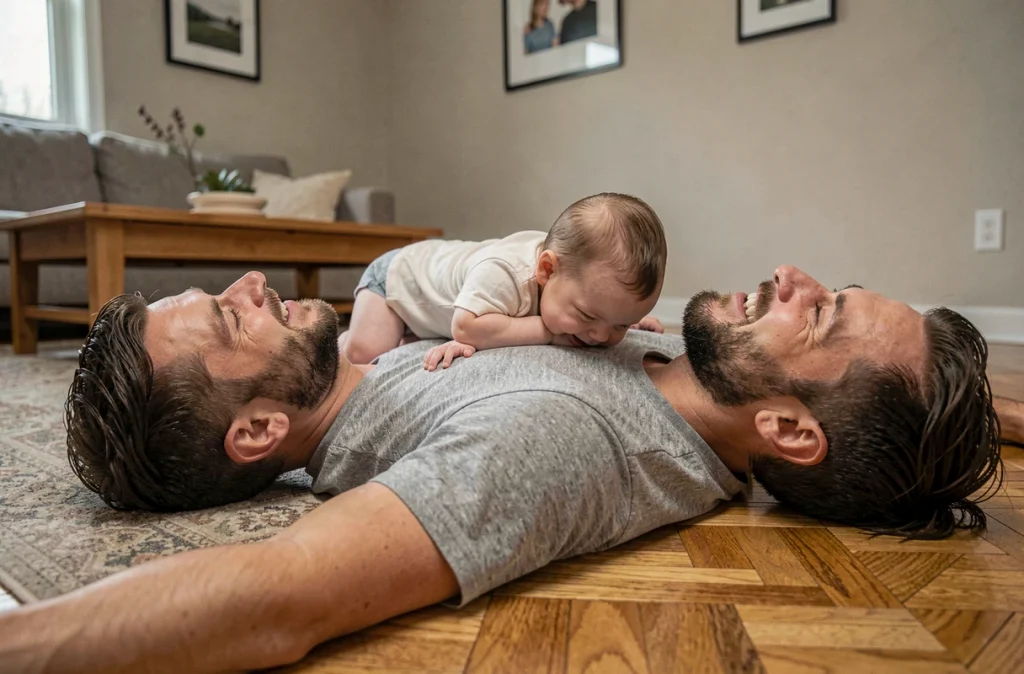
A baby placed on a firm, flat mat, without any cushions or supports, progresses at its own pace. This is the principle of free motor skills, theorized by Emmi Pikler. The idea is simple: the adult secures the space, observes, and resists the urge to “push forward” the stages.
In practical terms, this means not sitting a baby who cannot sit up alone, not standing it up by holding it under the arms, and limiting time spent in a bouncer or inclined seat. Every position the baby reaches on its own strengthens its muscles and confidence.
What Really Helps on the Floor
- A mat that is neither too soft nor slippery, placed in an open space where the baby can roll and pivot without obstacles
- A few lightweight objects placed just out of reach to encourage the desire to move (no need for sophisticated toys, a wooden ring is enough)
- Soft clothing that does not hinder movement, without overly rigid integrated feet or tight jeans
Motor development is not programmed. It is facilitated by arranging a space and accepting that each child has its own timeline.
Screens and Babies Under Two: What Recent Data Says
Why address screens so early? Because the temptation arises well before the baby can walk. A cartoon during diaper changes, a phone to calm cries in the car: these habits set in quickly.
The WHO and the American Academy of Pediatrics are categorical: no screens before 18 months, except for video conferencing with a close relative. In France, Inserm has shared data showing that an additional hour of screen time per day in early childhood is associated with a measurable decline in school performance and working memory tests several years later.
The main problem is not blue light or waves. It’s substitution: every minute of screen time replaces an interaction, active play, or sleep. For a newborn whose brain is developing through direct sensory exchanges, this substitution has a real cost on cognitive and language development.
Concrete Alternatives to Screens
When you need five minutes with your hands free, a mobile hanging above the mat, a mechanical music box, or simply your voice narrating what you’re doing in the room captures the baby’s attention. Narrating your daily actions develops its passive vocabulary much more effectively than a video.
Skin-to-Skin and Babywearing: Benefits Beyond Comfort
Skin-to-skin contact is not reserved for the delivery room. Practiced regularly in the first weeks, it regulates the newborn’s body temperature, stabilizes its heart rate, and promotes the establishment of breastfeeding when that is the parents’ choice.
Physiological babywearing extends these effects over the months. A baby carrier that respects posture (pelvis tilted, knees higher than the buttocks, rounded back) allows for contact while freeing the hands. A baby carried in a physiological position engages its postural muscles without excessive effort.
Here are some guidelines for appropriate babywearing:
- Before head control, prioritize carrying the baby facing the caregiver, never facing the world
- Ensure that the airways remain clear (chin off the chest, face visible)
- Alternate carrying and floor time so the baby can also explore on its own
Babywearing is not a substitute for a play mat. The two complement each other: one provides emotional security, while the other stimulates motor autonomy.
The first months with a baby require neither expensive equipment nor particular expertise. A safe sleeping space, time on the floor, frequent vocal exchanges, and vigilance regarding screens cover the essentials. The rest, your child will show you in its own time.