In September 2026, the Unaf Family Observatory published a survey conducted with OpinionWay among 2,500 parents. The results depict a family life under pressure: about two out of three parents forgo an additional child for financial reasons, and more than half report struggling to prepare for their children’s future.
These data raise a concrete question: how to maintain a fulfilling family life when the margins for maneuver are shrinking daily?
Budget constraints and sacrifices: what families really prioritize
The Unaf survey identifies two peaks of budgetary tension in family life: early childhood, burdened by childcare costs, and adolescence (ages 14-17), where expenses related to activities, equipment, and socialization increase. Between these two periods, families cope with rising fuel and food prices.
These constraints are not abstract. They translate into concrete sacrifices regarding certain outings, leisure activities, or visits to relatives. A weekend at the grandparents’ canceled because filling up the tank is too expensive, a sports club registration postponed, a cultural outing replaced by an afternoon at home. Family flourishing is now negotiated item by item.
Several families compensate by reorganizing their priorities rather than multiplying expenses, and resources like the cap-famille.fr website for families gather ideas suited to these daily realities. The question is not to spend more, but to choose what matters.

Parental time in daily life: quality over quantity
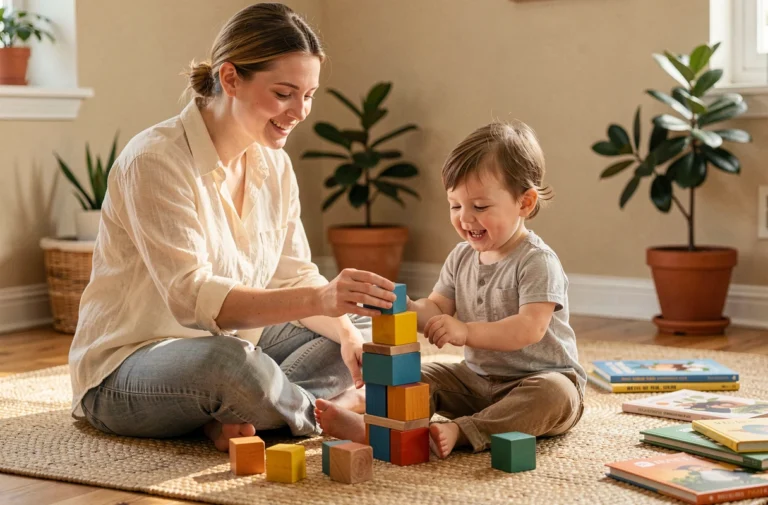
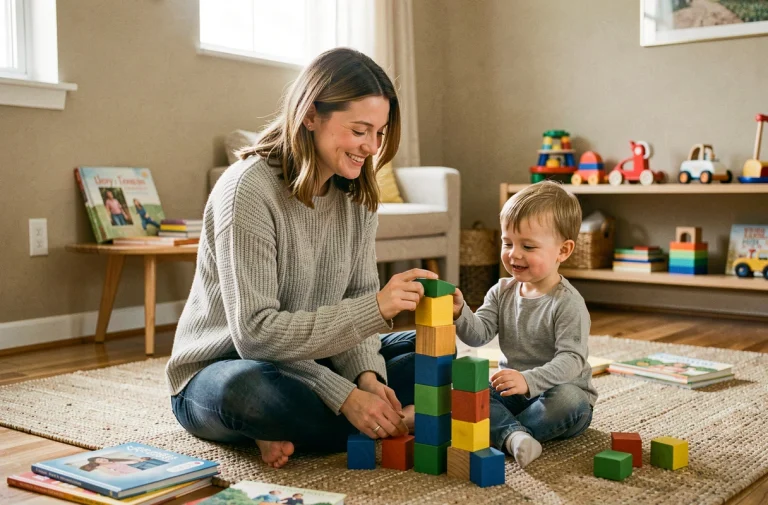
The most common trap in discussions about positive parenting is to pile on activities. More outings, more educational games, more scheduled “quality” moments. In practice, feedback from the field diverges on this point: some families benefit more from simple, repeated routines than from ambitious projects.
Three levers that cost nothing but structure the week
- A shared meal without screens, even if short, at least three times a week. The ritual matters more than the duration: twenty minutes are enough if everyone talks and listens.
- A moment of exclusive attention for each child, even ten minutes, where the parent does nothing else. Children clearly distinguish between physical presence and real presence.
- A household task done together rather than delegated or rushed alone. Folding laundry, preparing a dish, tidying a room: shared tasks create bonds without requiring a budget.
These practices do not belong to a labeled educational method. They rest on a simple principle: the regularity of a predictable framework reassures children and lightens parents’ mental load.
Parental mental load: identifying what weighs before seeking solutions
The family mental load is not just a forgotten shopping list. It includes invisible planning: medical appointments, school follow-ups, managing clothes that become too small, anticipating school holidays. This burden still primarily rests on mothers, as highlighted by a Senate report on inequalities related to motherhood.
The first lever is not to add an organizational tool but to make visible what is invisible. Listing on paper, for a week, every micro-decision made for the household allows for measuring the real imbalance. Without this diagnosis, any distribution remains approximate.
What works according to families that have rebalanced
Assigning entire domains (not isolated tasks) to each parent works better than sharing task by task. Managing the entire medical follow-up for children, for example, means making appointments, accompanying the child, passing information to the school, and renewing prescriptions. Delegating a complete domain eliminates supervision, which is the most exhausting part of the mental load.

Fulfilling family life and social pressure: lowering the bar
Social media and parenting content disseminate an implicit model of the “good family”: Montessori activities on Wednesdays, homemade cooking every evening, nature outings on weekends, controlled screen time. This model generates guilt much more than fulfillment.
The available data do not allow us to conclude that a specific parenting style guarantees happier children. However, research in developmental psychology converges on one point: the emotional stability of parents influences children more than the content of the proposed activities. An exhausted parent organizing a painting workshop transmits stress. A rested parent watching a cartoon with their child conveys availability.
Accepting that a pizza-movie night can be an excellent family moment, just like a hike in the woods, is a necessary adjustment. Daily family life is not measured by activities checked off a list.
Family budget and priorities: choosing rather than accumulating
In the face of the financial constraints documented by Unaf, a pragmatic approach is to prioritize spending based on its real impact on family well-being. Not all “children’s” expenses are equal.
- Relational expenses (a sports club activity, a summer camp, a regular visit to grandparents) have a lasting impact on a child’s social development.
- Material expenses (toys, brand-name clothing, the latest gadget) provide immediate but fleeting satisfaction.
- Parental comfort expenses (occasional cleaning help, grocery delivery) reduce fatigue and free up time for relationships. Investing in parents’ rest benefits the whole family.
The trade-off between these categories depends on each household. Recognizing this avoids reproducing a single model that does not correspond to one’s means or real needs. A family that dedicates its limited budget to a carefully chosen single activity builds something more solid than a family that spreads itself thin across ten discounted options.