The fashion trends for the spring-summer 2026 season are built around a dual movement: fluid silhouettes inherited from poetcore and a regulatory awareness that redefines the relationship with dressing. The anti-fast fashion law, definitively adopted by the French Parliament, imposes a penalty on non-durable clothing starting September 1, 2026, with fines ranging from 0.25 to 12 euros per item.
This legislative framework concretely modifies clothing choices and encourages a rethinking of what a stylish look means this season.
Textile Penalty and Stylish Fashion: What the Anti-Fast Fashion Law Changes in the Wardrobe
Penalties could reach up to 20 euros per item by 2030, capped at 50% of the pre-tax price. For a trendy wardrobe, the consequence is direct: disposable low-cost pieces will cost significantly more in France.
This price shift encourages two reflexes. The first: investing in clothing made from more durable materials, where the cost per wear remains competitive over several seasons. The second: turning to second-hand items, which escape the penalty and allow for trendy cuts (wide pants, fluid dresses) at controlled prices.
The law also provides for a ban, starting January 1, 2027, on influencer advertising for ultra-fast fashion platforms, with fines of up to 100,000 euros. Massive hauls on TikTok or Instagram will gradually give way to content focused on quality or upcycling.
To follow fashion trends without relying on these sources, specialized media are already compiling the pieces and looks of the season: https://myfashionmag.fr/ particularly covers the silhouettes and colors to adopt each season.
Trendy Colors Spring-Summer 2026: The Shades That Structure a Look
The palettes of the season are clearly polarized. On one side, bright and saturated shades (orange, yellow, vivid pink). On the other, natural tones (olive green, sky blue, beige) that anchor silhouettes in a refined sobriety.
Saturated Shades for Statement Pieces
Butter yellow and orange are worn on visually impactful pieces: a cropped jacket, a midi skirt, or a structured bag. The idea is not to cover the entire silhouette in a bright color, but to use a single colored piece as the focal point of the look.
Pairing wide beige pants with an orange top creates a contrast that works effortlessly. The rule remains the same as in painting: a color accent gains strength when the rest of the outfit remains neutral.
Natural Tones for the Wardrobe Foundation
Soft colors (off-white, taupe, light khaki) form the base upon which seasonal outfits are built. Their advantage for a sustainable wardrobe: they transcend seasons without appearing dated. A beige pant or a short trench in these shades can be worn in both spring and autumn.
Key Cuts and Pieces to Adopt This Season
The long fluid dress dominates the spring-summer 2026 collections. Inspired by poetcore, it features a loose drape, lightweight materials, and a length that falls below the knee or to the ankle. It’s a piece that works well on its own with minimalist shoes, without needing multiple accessories.
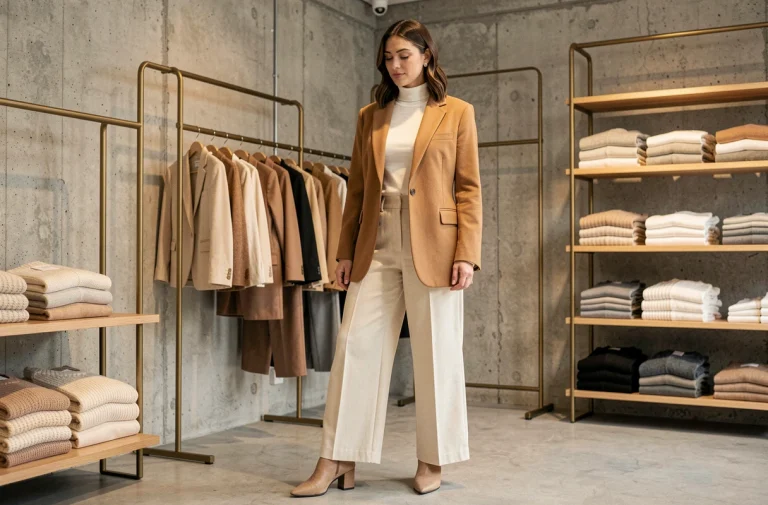
The structured wide pant establishes itself as the alternative to jeans for a casual chic look. Its sharp cut at the waist and loose drape redefine the silhouette without constraining movement. Worn with a tucked-in shirt or a simple t-shirt, it’s enough to structure a complete outfit.
The coordinated set (matching top and bottom, often in linen or textured cotton) is gaining ground because it solves a concrete problem: putting together a look in seconds. Discreet prints or tone-on-tone textures avoid a uniform effect.
- The long fluid dress, made of lightweight material, worn with flat sandals or mules, for a poetic style suited to warm days.
- The structured wide pant, with a marked waist and loose drape, replacing jeans in seasonal outfits.
- The short colored jacket (orange, butter yellow, pink), worn open over a neutral basic to create a pop of color.
- The coordinated set in linen or cotton, simplifying the composition of a look while remaining trendy.
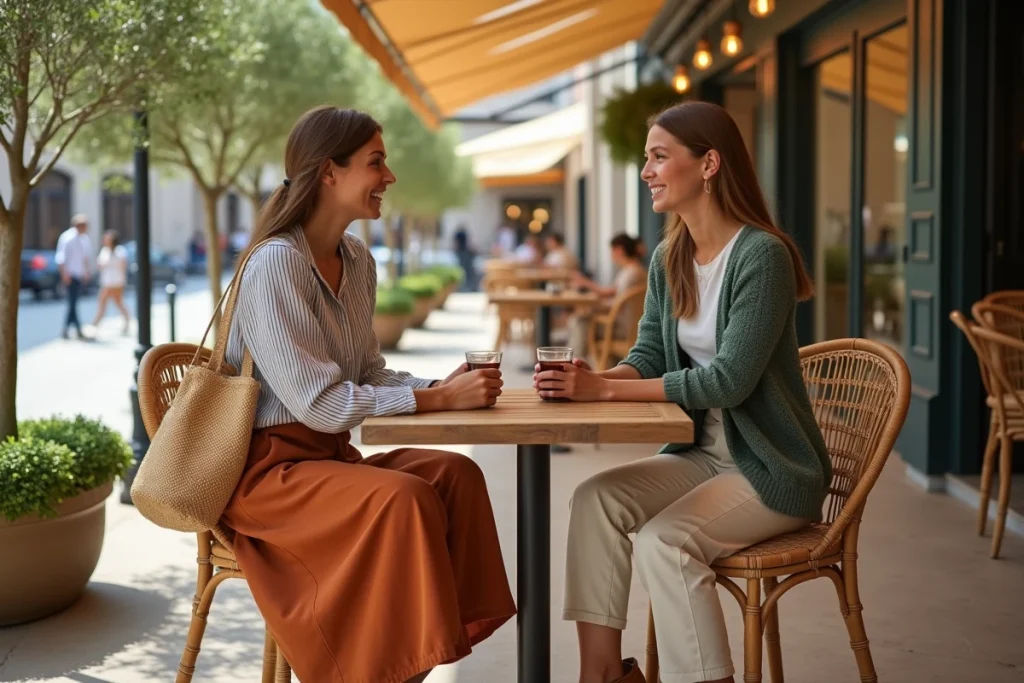
Environmental Labeling for Textiles: A Selection Criterion for Seasonal Pieces
France is preparing a system of almost mandatory environmental labeling on clothing. This system will assign a visible score to items based on their ecological impact (raw materials, transport, durability). Choosing a fashion piece will also become an act of reading labels, as is already done for food.
For a seasonal wardrobe, this criterion reinforces the logic of versatile pieces. A fluid dress made from traceable natural fibers or pants made from organic cotton will score better than a low-end synthetic equivalent. The labeling does not change the style, but it guides decisions when two pieces look visually similar.
Digital traceability of materials is also progressing in eco-responsible brands, which document every step of production. A trendy and traceable garment is no longer a niche: it is a rapidly growing segment, driven by consumer demand and the French regulatory framework.
The fashion trends of this season can be read on two levels. The first, visible, concerns the silhouettes (fluid, ample, colored in touches). The second, structural, relates to the regulatory framework that increases the cost of disposable fashion and values durable pieces. Composing a stylish look in 2026 means balancing these two dimensions: choosing current cuts in materials that last more than one season.