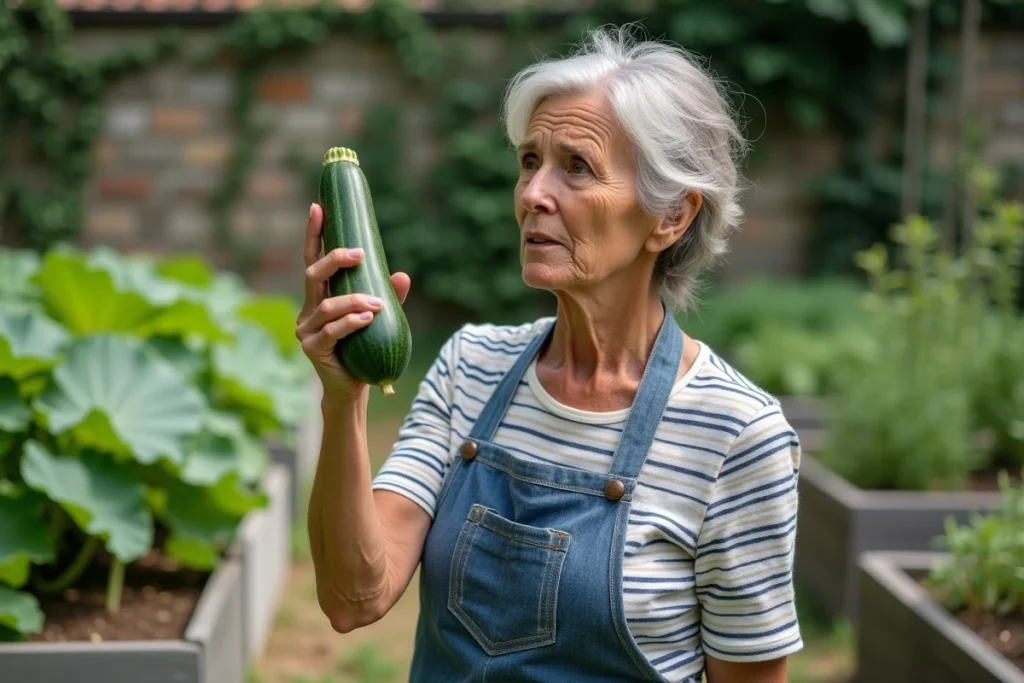
Cucurbitacins are oxygenated tetracyclic triterpenoids found in the wild in all Cucurbitaceae. Selective breeding has gradually reduced their biosynthesis in food cultivars, but the responsible gene (Bi) has not disappeared. It only takes an abiotic stress or accidental crossbreeding with an ornamental squash to reactivate the metabolic pathway and produce dangerous concentrations in the fruit.
Cucurbitacins in zucchini: reactivation mechanism in the vegetable garden
The production of cucurbitacins in Cucurbita pepo remains latent as long as the plant is not subjected to a marked physiological imbalance. The most common trigger in the garden is abrupt water stress, typically a cycle of waterlogged soil followed by dry conditions over a few days.
Heat waves exacerbate the phenomenon. ANSES reports that poisonings related to cucurbitacins are a recurring reason for reporting each year during the summer heat. The correlation between water stress, extreme temperatures, and fruit bitterness is direct.
Another underestimated factor is cross-pollination with ornamental squashes grown nearby. Seeds from this cross can produce plants whose fruits may accumulate cucurbitacins as early as the first generation. Collecting your own seeds without controlling varietal isolation is like playing roulette with the toxicity of the next harvest. To know how to recognize a bitter zucchini before it ends up on the plate, the taste test remains the most reliable method.
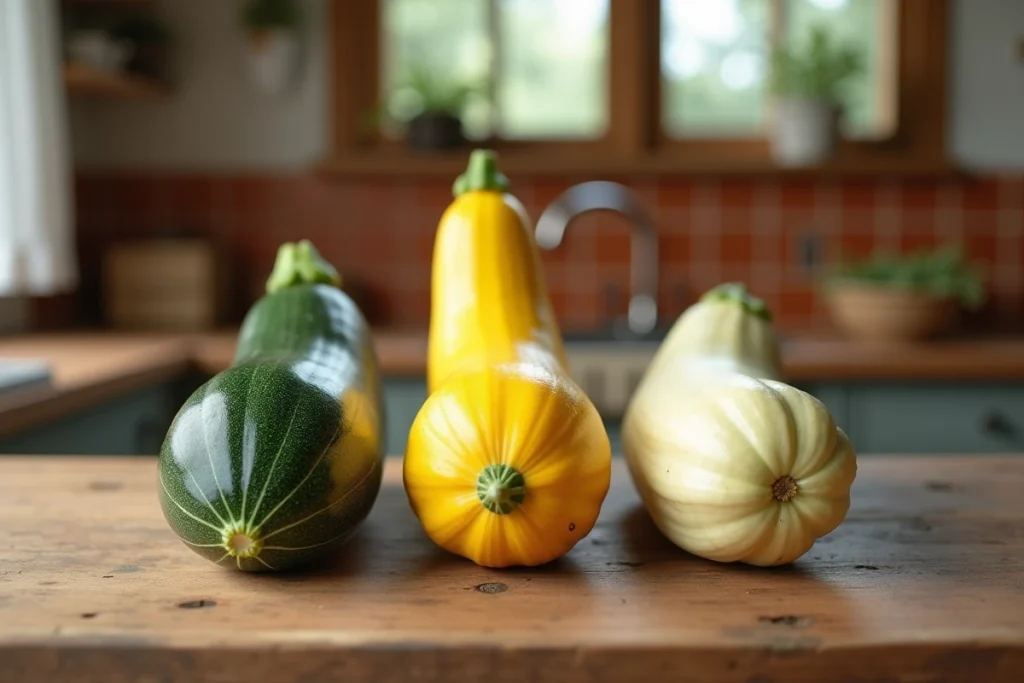
Deep and morning watering: the anti-bitter strategy of market gardeners
Experienced market gardeners have switched to a specific watering protocol to stabilize soil moisture and cut short the biosynthesis of cucurbitacins. The principle is based on rare but generous watering, exclusively at the base and early in the morning.
We recommend watering every two to seven days depending on soil texture, with substantial volumes per square meter rather than small daily doses. Clay soil retains water better and tolerates longer intervals. Sandy soil requires more frequent watering.
Why watering in the morning makes a difference
Evening watering keeps foliage wet all night, which promotes powdery mildew without addressing the underlying issue. In the morning, the plant absorbs water when its evapotranspirational demand rises, and the soil has time to dry on the surface before nightfall. This regularity in watering reduces the stress that triggers the production of bitter compounds.
- Water at the base, never by spraying on the foliage, to limit fungal diseases and concentrate water in the root zone
- Mulch the soil several centimeters deep to slow evaporation between waterings and buffer temperature fluctuations
- Monitor weather forecasts: an announced heat wave justifies preventive watering the day before, even if the soil still seems moist on the surface
Taste test and visual signs: sort before cooking
Neither washing nor cooking destroys cucurbitacins. These molecules withstand heat and remain toxic in a cooked dish. The only effective barrier is sorting beforehand, at the time of harvest or preparation.
The reference test involves cutting a thin raw slice and tasting it with the tip of the tongue. A healthy zucchini has a neutral to slightly sweet taste. Any bitterness, even slight, indicates the presence of cucurbitacins. The fruit should then be discarded entirely, not just the tasted part.
Visual signs to watch for on the plant
A zucchini that has become very large after being left unharvested is not necessarily bitter, but it concentrates more seeds and its flesh loses quality. We observe that fruits left too long on the plant during hot weather accumulate two risk factors: stress from an overloaded plant and prolonged exposure to high temperatures.
Yellowed or wilted leaves in mid-summer often signal a plant suffering from water stress. A stressed plant produces potentially bitter fruits, even if previous zucchinis were perfect. Each fruit must be tested individually.
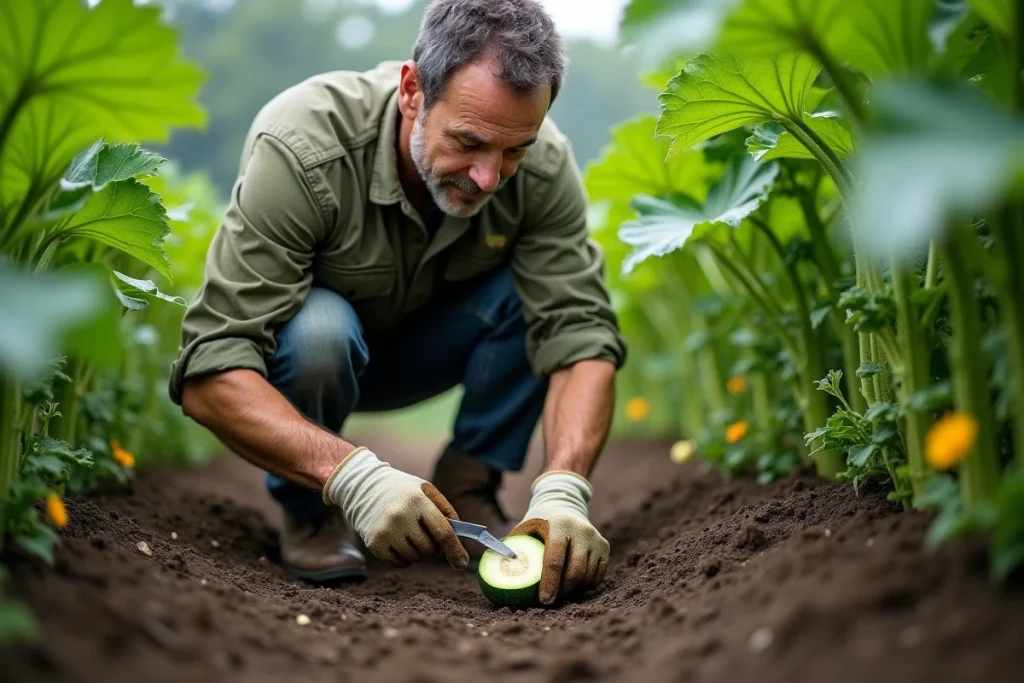
Seeds collected from the vegetable garden: the trap of unintentional hybridization
Collecting seeds from your own zucchinis is a common practice among self-sufficient gardeners. The problem arises when ornamental squashes, gourds, or other Cucurbita grow within a pollination radius (bees can easily travel several hundred meters).
Seeds from cross-pollination produce plants with high cucurbitacin levels, sometimes as early as the first year of cultivation. The fruit may look completely normal. Only the taste reveals the problem.
- Never collect seeds if non-food squashes are growing nearby, including at a neighbor’s
- Buying certified seeds each year ensures a level of cucurbitacins controlled by the breeder
- If in doubt about the origin of a spontaneous plant (regrowth on compost), always taste the first fruit before consuming the rest of the harvest
Symptoms of cucurbitacin poisoning: react quickly
Abdominal cramps and diarrhea usually appear within hours of ingestion. Some people only notice the bitter taste after consuming a significant amount, especially in heavily seasoned dishes (gratin, ratatouille).
Tox Info Suisse confirms that requests for information multiply during the summer and autumn months. Any zucchini with a bitter taste should be spat out immediately, and the rest of the dish discarded. In case of intense or persistent digestive symptoms, contact a poison control center or a doctor without delay.
The reflex to instill: taste raw before cooking. This habit takes three seconds and avoids hours of digestive troubles. Cucurbitacins do not forgive, and no cooking method neutralizes them.